
Shuttle buffer vs. more conveyor: when the buffer wins
More conveyor feels like the cheap, safe answer. It often isn’t, especially when the order things arrive in matters as much as the space they take up.

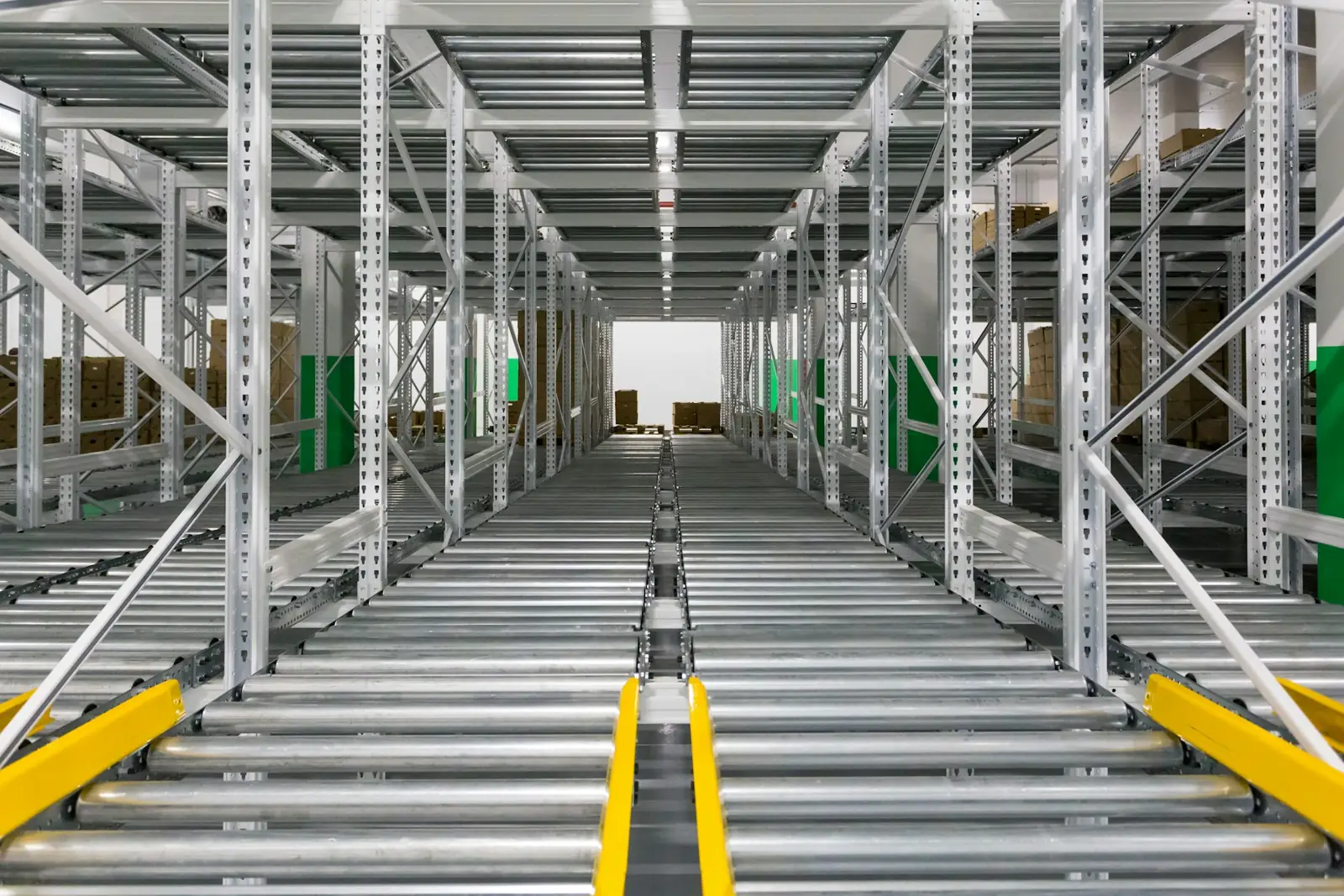
Here’s a conversation I’ve had more than once with automotive suppliers. Production and shipping don’t run at the same pace. The customer’s assembly line pulls parts in a specific sequence, on a tight window, and any hiccup upstream ripples straight to the dock. So somebody proposes the obvious fix: add more accumulation conveyor between the two and let it soak up the difference.
Sometimes that’s exactly right. Often it isn’t, and the reasons only show up once you look at how the buffer has to behave, not just how much it has to hold.
What a buffer is really for
A buffer decouples two processes so one can stop, speed up or change order without stopping the other. That’s three jobs, and conveyor does only the first one well. It holds material in a line. First in, first out. If the downstream process needs item 47 before item 12, a straight run of conveyor can’t help you. It has to wait until item 12 comes off the end.
That’s the heart of it. If your customer pulls in a sequence that doesn’t match the order you produce in, you don’t just need space. You need random access. Conveyor gives you a queue. A shuttle buffer gives you a warehouse in miniature, where any position can be retrieved on demand.
When more conveyor is the right call
Let’s be fair to conveyor. It’s simple, well understood and cheap to maintain. If your flow is steady, the order in equals the order out, and you just need a few minutes of slack to absorb short stops, adding accumulation is usually the sensible answer. Don’t buy a shuttle system to solve a problem that a longer zero-pressure section solves.
It also wins when floor space is plentiful and the buffer is small. A few dozen positions don’t justify a storage system with its own software and maintenance plan.
When the buffer wins
The math flips when one or more of these is true. The customer sequence differs from your production sequence, so you need to re-order, not just hold. The buffer has to cover a long interruption, like a shift change or a line stop of an hour or more, which takes a lot of positions. Floor space is tight or expensive, and a buffer that goes up instead of out frees room for production. Or the mix keeps changing, and you need the system to adapt in software rather than by moving steel.
Four-way shuttle systems are especially good here, because vehicles can move between aisles and the system can grow in small steps as volume grows. Density goes up, and the footprint per stored load goes down sharply compared with a long serpentine of conveyor.
The costs people forget on both sides
Conveyor’s hidden costs are space and inflexibility. A big accumulation loop eats floor that could have held a production cell, and when the customer changes its sequencing rules, the steel doesn’t care. You end up adding manual workarounds, which is exactly what you were trying to avoid.
A shuttle buffer’s hidden costs are software and recovery. The control logic, the interface to your MES or WMS, and the plan for what happens after a power blip or a jammed load all need real attention. Ask any vendor how long the buffer takes to recover and resume sequence after an unplanned stop. Then ask for a reference site where you can see it happen.
How I’d decide
Start with data, not equipment. Pull a few weeks of production output and customer pull signals and look at the gap between them: how far out of order they get, how long the longest gaps last and how that changes on your worst day. Size the buffer from that distribution, with headroom for growth.
Then cost both options honestly, including floor space at what it’s worth to you, software support, maintenance and the labor each one still needs. If the sequences match and the gaps are short, conveyor will usually win. If they don’t, the buffer often pays for itself in avoided expedites and premium freight alone.
Either way, the decision should come from your data, not from whichever vendor got to you first. That’s the kind of question ELMAT Group helps work through.
More insights
The FCC robot rule, from the buyer's side
What the July 2026 Covered List update means for open quotes, installed fleets and the conversation with your CFO.
How to compare ASRS quotes when no two vendors quote the same thing
Six proposals, six definitions of scope. How to normalize them and score on total cost of ownership.
The first 180 days of selling automation in North America
For manufacturers from Asia-Pacific and Europe: what to build, who to hire and which mistakes cost a year.